Debt Consolidation Australia Home Loan Repayment Calculator
Calculate home loan repayments with our Home Loan Repayment Calculator. View detailed amortization charts, compare loan terms, and plan your mortgage with confidence.
Calculator results are estimates only and not quotes. Actual quotes will be provided by licensed brokers after you submit an enquiry.
Home Loan Details:
Important!
Home Loan Interest Rates differ from lender to lender and will depend on your individual circumstances (credit history, employment status, age, etc.). To find out if you qualify ... and for a free, personalised interest rate and repayment quote,
please CLICK HERE
Home Loan Amortisation Calculator
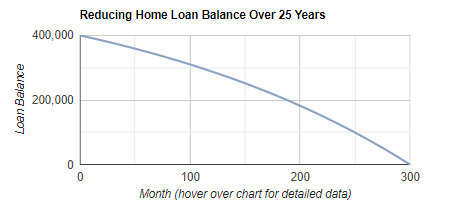
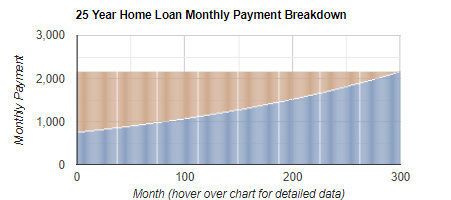
The following amortisation graphs detail month-by-month data on the progress of the proposed loan. The first chart below examines the reducing loan balance over the course of the finance contract term. The second graph illustrates the portion of each monthly repayment allocated to payment of interest vs principal reduction.
How to use our Home Loan Repayment Calculator
Our Home Loan Repayment Calculator helps you estimate your mortgage repayments in Australia and understand how a loan may reduce over time. It is useful for budgeting, comparing loan terms, and visualising an amortisation schedule (how each repayment is split between interest and principal). The calculator is designed for planning only and works best when you enter realistic assumptions.
Important information: Results are estimates only and do not constitute a quote. Interest rates and loan features vary by lender and may change. This information is general and does not take into account your objectives, financial situation or needs. Consider whether it is appropriate for you and seek professional advice if required.
How to complete the calculator fields (in order):
1. Purchase Price: Enter the property purchase price. If you expect to borrow extra for costs, you may choose to include amounts such as stamp duty, insurance, and other buying costs in this figure so your estimate reflects your likely loan size. Enter whole numbers only (no dots or commas).
2. Deposit or Equity Value: Enter your cash deposit or usable equity from another property (if applicable). A higher deposit generally reduces the loan amount and can lower repayments. Enter whole numbers only (no dots or commas).
3. Term of Loan (years): Select the number of years to repay the loan. Longer terms usually reduce repayments but increase total interest paid over the life of the loan.
4. Interest Rate (% per annum): Select an interest rate for the simulation. Use a realistic rate and consider testing higher rates to understand “rate rise” risk.
5. Calculate: Click calculate to generate your results.
How to interpret the results:
1. Repayment estimate: Use this as a starting point for affordability checks, remembering real loans may include fees and different features.
2. Amortisation charts: Review the loan balance chart to see how your balance falls over time, and the interest versus principal chart to understand how early repayments are typically interest-heavy, then shift toward principal reduction later.
3. Compare scenarios: Adjust the term, deposit/equity, or interest rate and recalculate to compare loan terms and see how changes affect repayments and total interest over time.
Debt consolidation loans combine multiple eligible debts into one new loan, usually with one repayment schedule. This guide explains how they work in Australia, what lenders commonly assess, the costs and risks to compare, and what to consider before applying. - read more
Welcome to our guide on avoiding common mistakes when consolidating debts. We're glad you're here, as taking the time to educate yourself is a crucial step towards financial well-being. - read more
Welcome, readers! We're here to talk about something incredibly important yet often overlooked: improving your credit score. Your credit score is a financial report card used to evaluate your creditworthiness, and it can have a significant impact on your ability to secure loans, mortgages, and even rental agreements. - read more
Debt consolidation is only one way to deal with debt. This guide explains how it differs from financial hardship assistance, informal creditor arrangements, debt agreements and other debt relief options in Australia. - read more
A debt consolidation calculator can help you compare your current debts with a possible new loan by estimating repayments, interest and total cost differences. The result is only as useful as the assumptions you enter, so it is important to understand the inputs, outputs and limitations before relying on the estimate. - read more
The latest Australian lending indicators are a reminder that personal loans remain an important part of household finance, particularly for people trying to smooth out cash flow, cover large costs or bring several debts under one repayment. For Australians already juggling credit cards, car finance, buy now pay later balances or other unsecured debts, the trend is worth watching closely. - read more
The latest Australian credit card lending updates have put household debt back under the spotlight, with many borrowers still carrying balances that attract high interest. While spending patterns can shift from month to month, the broader message is clear: when everyday costs remain elevated, credit cards can quickly move from convenience to financial pressure. - read more
A recent Finder credit card example has put a sharp spotlight on a problem many Australians quietly face: the minimum repayment can look manageable, while the true cost of carrying card debt may be enormous. In the example, a low five-figure credit card balance would take an estimated 73 years to clear if only the minimum repayment was made, with interest costs nearing $64,000 over time. - read more
A fresh round of lender competition is giving some Australian borrowers a reason to review their debts, but the benefits are not being shared evenly. Canstar reported on 16 July 2026 that 23 lenders have cut at least one variable home loan rate since 1 May, despite the Reserve Bank's rate hikes in February, March and May. The catch is that these reductions are aimed at new borrowers, or existing customers willing to refinance and effectively become new customers elsewhere. - read more
Australian credit card debt is again moving in the wrong direction, with Canstar’s latest analysis of Reserve Bank of Australia figures showing personal credit card debt accruing interest reached $19.4 billion in May 2026. The increase was $61 million for the month, and while that may look modest beside the national total, it signals a deeper issue for households already stretched by rent, mortgage repayments, groceries, utilities and other everyday costs. - read more