Debt Consolidation Australia Personal Loan Repayment Calculator
Calculate repayments with our Personal Loan Calculator. Compare loan terms, view repayment schedules, and plan your personal finance with confidence.
Calculator results are estimates only and not quotes. Actual quotes will be provided by licensed brokers after you submit an enquiry.
Personal Loan Details:
Important!
Personal Loan Interest Rates differ from lender to lender and will depend on your individual circumstances (credit history, employment status, age, etc.). To find out if you qualify ... and for a free, personalised interest rate and repayment quote, please CLICK HERE
Personal Loan Amortisation Calculator
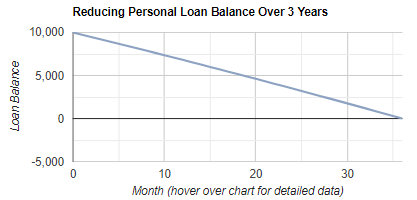
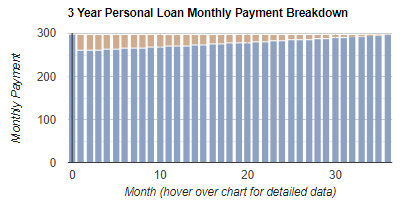
The following amortisation graphs detail month-by-month data on the progress of the proposed loan. The first chart below examines the reducing loan balance over the course of the finance contract term. The second graph illustrates the portion of each monthly repayment allocated to payment of interest vs principal reduction.
How to use our Personal Loan Repayment Calculator
Our Personal Loan Repayment Calculator helps you estimate your ongoing loan repayments and the total cost of borrowing before you apply. By adjusting the loan amount, loan term and interest rate, you can compare scenarios and choose a repayment level that better fits your budget. It also provides an amortisation view so you can see how each repayment is split between interest and principal over time.
Important note for ASIC compliance: this calculator provides general information only and does not take into account your objectives, financial situation or needs. Results are estimates and may not include lender fees, comparison rates, commissions, insurance, redraw features, or changes to your interest rate. Always check a lender’s final quote and loan contract before deciding.
How to complete the form for the best result
1. Loan Amount Required: Enter the total amount you want to borrow in Australian dollars as a whole number (no decimals or commas). Use the amount you actually need, not the maximum you might be approved for, to avoid overpaying interest.
2. Term of Loan: Select the number of years you plan to repay the loan over. A longer term can reduce the monthly repayment, but typically increases the total interest paid over the life of the loan.
3. Interest Rate: Choose an annual interest rate for the simulation. If you have a lender quote, use that rate. If not, test a conservative range to understand best case and worst case outcomes.
4. Calculate: Click the calculate button to generate your results.
How to interpret the results
1. Repayment estimate: Treat the repayment figure as your baseline commitment. Stress-test your budget by increasing the rate or shortening the term to see if repayments remain affordable.
2. Amortisation and graphs: Review the month-by-month amortisation view and charts to understand how the balance reduces and how early repayments often include a higher interest portion, shifting toward more principal over time.
3. Compare scenarios: Re-run the calculator with different terms and rates to balance affordability (cash flow) against total interest (overall cost).
Creating a family budget might sound daunting, but it’s an essential step toward financial wellness. It’s about understanding where your money comes from and where it goes, allowing you to make informed decisions about your spending and savings. A well-planned budget can be the key to reducing financial stress and ensuring a secure future for your family. - read more
When living costs rise or income becomes uncertain, credit card debt can become harder to manage. Understanding how interest, repayments, budgeting, consolidation and hardship support work can help Australians make more informed decisions about reducing card balances and avoiding further debt. - read more
Welcome to our blog, where we're dedicated to helping you make the most of your financial journey. Today, we're going to delve into an important aspect of financial health: tracking your progress after debt consolidation. - read more
Debt consolidation loans combine multiple eligible debts into one new loan, usually with one repayment schedule. This guide explains how they work in Australia, what lenders commonly assess, the costs and risks to compare, and what to consider before applying. - read more
In the realm of financial wellness, tracking your monthly expenses is a crucial step towards effective debt management. Many Australians grapple with the challenges of keeping their debts under control, particularly in a dynamic economic environment. - read more
The latest lending updates point to a familiar pattern: many Australians are still reviewing their loans, refinancing where they can, and looking for ways to bring borrowing costs under control. With household budgets stretched by groceries, rent, utilities, insurance and transport, even a modest reduction in repayments can feel meaningful. But for people carrying several debts at once, the decision to refinance or consolidate needs more care than simply chasing the lowest advertised rate. - read more
Recent consumer finance reporting has again highlighted a problem many Australians already feel in their weekly budget: emergency savings are not stretching far enough. When the cost of groceries, rent, mortgage repayments, utilities, fuel and insurance remains elevated, even a relatively ordinary surprise bill can push a household towards credit cards, buy now pay later, personal loans or payment extensions. - read more
Fresh financial complaints reporting has again highlighted a difficult reality for many Australian households: when repayments start to fall behind, the problem is rarely limited to one bill. Mortgage stress, credit card balances, personal loans, car finance, buy now pay later commitments and utility arrears can all collide at once, leaving borrowers unsure which creditor to call first or what support they are entitled to request. - read more
Recent consumer finance reporting has put buy now pay later back in the spotlight, with more Australians appearing to use short-term credit to manage everyday costs such as groceries, utilities, fuel and household essentials. On the surface, splitting a purchase into smaller instalments can feel manageable. The concern is what happens when several small commitments land at the same time as rent, mortgage payments, credit card minimums, car finance and personal loan repayments. - read more
The Reserve Bank of Australia’s latest decision to leave the cash rate unchanged gives households a moment to breathe, but it does not remove the pressure many borrowers are already feeling. For Australians carrying credit card balances, personal loans, car finance or buy now pay later debt, a steady cash rate can feel like welcome news after a long period of higher borrowing costs. - read more